
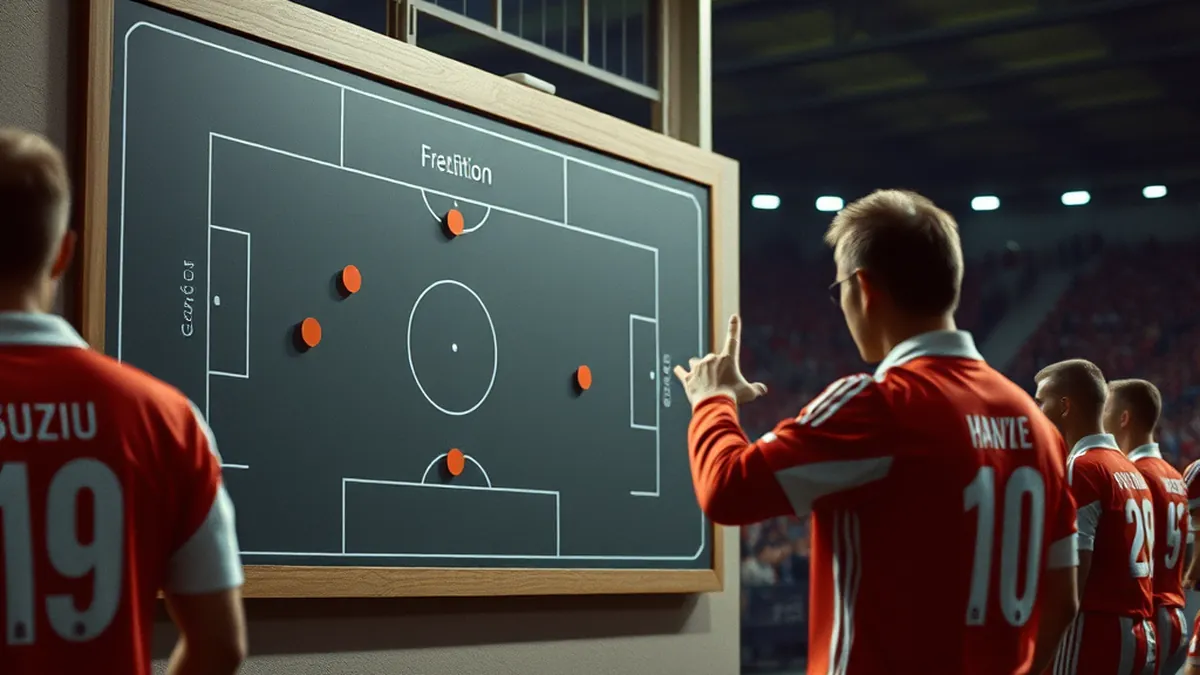
Tactical Overview of Recent Form
Cheltenham Town's recent performances have showed a blend of resilience and vulnerability. While the Robins have displayed moments of attacking flair, tactical inconsistencies have led to dropped points in key matches. Analyzing their formation, currently oscillating between a 4-2-3-1 and a 3-5-2 setup, reveals opportunities for optimization.
Current Formation Dynamics
In the 4-2-3-1 formation, the double pivot in midfield has been effective in shielding the defense, but it often leaves the attacking trio isolated, especially against teams that press high. Conversely, the 3-5-2 formation has allowed for width and overlapping runs from wing-backs, yet it tends to expose the backline when the opposition breaks quickly, leading to defensive lapses.
Suggested Tactical Tweaks
1. Adopting a Flexible 4-3-3 Formation: Transitioning to a 4-3-3 could provide a more balanced approach. This formation allows for a stronger midfield presence, with one player sitting deep and the other two pushing forward to support the attack. This should help alleviate pressure on the defense while enabling a quicker transition to offensive play.
2. Encouraging Full-Back Involvement: The full-backs should be encouraged to push higher up the pitch in both formations. When playing a 4-3-3, their width will stretch the opposition, creating space for the wingers to operate in. In a 3-5-2, full-backs can become key playmakers by delivering crosses into the box, especially with strikers like Alfie May making runs.
3. Using a Target Man in Attack: Bringing in a target man can also be a big change. This would allow for a more direct style of play, where long balls can be played into the forward, who can flick on to the wingers or midfield runners. This tweak could exploit the physicality of defenders in League Two, putting them under pressure.
4. Encouraging Pressing from the Front: Implementing a coordinated pressing strategy can disrupt opponents’ build-up play. When the attacking players apply pressure as a unit, it can force mistakes high up the pitch, leading to quick scoring opportunities. This requires the forwards to work in tandem, which can also help in maintaining defensive shape when possession is lost.
Individual Roles and Responsibilities
To support these tactical adjustments, individual players must be clear on their roles. For instance, the central midfielder in the 4-3-3 should focus on linking play between defense and attack, while one of the wingers should be tasked with cutting inside to create goal-scoring opportunities. This dynamic can make Cheltenham’s attacks more unpredictable and harder to defend against.
Conclusion: The Path Forward
As Cheltenham Town continues its journey in League Two, embracing these tactical tweaks can prove vital for improving consistency and performance. By refining their formation and player roles, The Robins can enhance their attacking threats while solidifying their defensive structure, paving the way for a successful season ahead.